
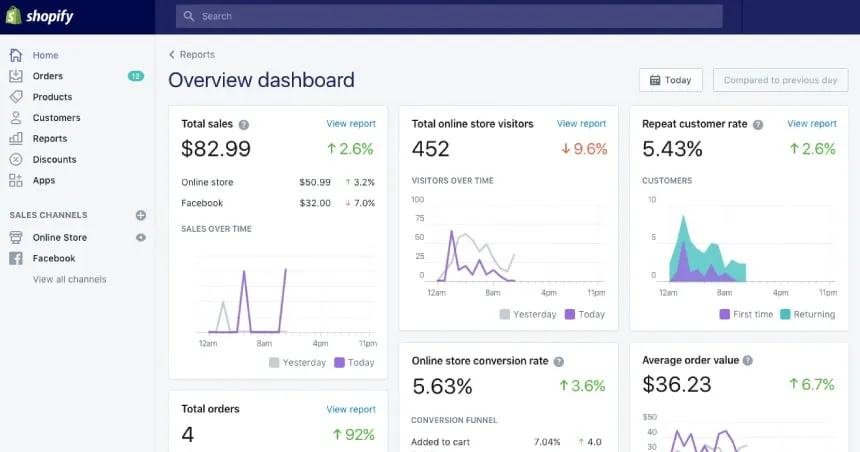
- Defining Feature Adoption Entropy in the Shopify Plus Context
- The Silent Erosion: How Unused Features Impact ROI
- Beyond the Hype: Differentiating True Value from Shelfware
- The Root Causes of Post-Launch Decay: A Technical & Business Perspective
- Misaligned Expectations & Inadequate Training
- Technical Debt & Feature Bloat
- Lack of Continuous Monitoring & Iteration
- Quantifying the Decay: Metrics for Measuring Feature Adoption & ROI
- User Engagement & Feature Utilization Rates
- Conversion Impact & A/B Testing Unused Features
- Cost of Ownership vs. Value Realization
- Strategic Project Management to Combat Entropy: A Proactive Framework
- Pre-Launch: Stakeholder Alignment & User Story Mapping
- Launch Phase: Targeted Onboarding & Training Programs
- Post-Launch: Establishing a Feature Governance & Iteration Loop
- Building a Culture of Continuous Value Realization on Shopify Plus
- The Role of a Dedicated Feature Adoption Lead
- Integrating Feedback Loops into the Development Cycle
- Future-Proofing Your Shopify Plus Investment
- Case Studies & Actionable Takeaways for E-commerce Leaders
- Further Reading & References
- Related Reading
Defining Feature Adoption Entropy in the Shopify Plus Context
Feature Adoption Entropy describes the natural, progressive decay of value and utilization for new or existing features within a Shopify Plus ecosystem post-launch. This phenomenon quantifies the gap between a feature's intended ROI and its actual realized value, often exacerbated by neglect, poor integration, or a lack of continuous user engagement strategies.The Silent Erosion: How Unused Features Impact ROI
Every new feature deployed on a Shopify Plus store, from advanced personalization engines to complex loyalty programs, carries an implicit promise of enhanced customer experience or operational efficiency. When these features are underutilized or completely ignored by the target audience, that promise turns into a liability. This is the silent erosion of Feature Adoption Entropy.Unused features don't just sit idly; they consume resources. There's the direct cost of development and implementation, often substantial for custom Shopify Plus features. Beyond that, there are ongoing maintenance costs, licensing fees for apps, and the opportunity cost of resources that could have been allocated to higher-impact initiatives.
This decay directly impacts your Shopify Plus ROI. A feature that cost six figures to develop but sees minimal engagement yields no return. It adds complexity to your tech stack, potentially slows down site performance, and can even confuse users who encounter poorly integrated elements.
Shopify Plus dashboard features decaying neglected
Beyond the Hype: Differentiating True Value from Shelfware
The e-commerce landscape is rife with solutions promising transformative results. As senior e-commerce managers, we must cut through the marketing hype to identify what truly adds value. Many features, while technically sound, become "shelfware" – implemented but rarely used – because they don't solve a genuine user problem or fit seamlessly into the customer journey.True value emerges when a feature actively contributes to key business metrics, whether that's increased conversion rates, higher average order value (AOV), improved customer retention, or streamlined operational workflows. Differentiating this from shelfware requires a rigorous pre-implementation analysis. This involves deep dives into user needs, competitive analysis, and a clear understanding of your current Shopify Plus ecosystem. Without this foresight, you risk investing in features that only contribute to your technical debt and adoption entropy.
The Root Causes of Post-Launch Decay: A Technical & Business Perspective
Understanding why features fail to achieve their full potential is critical for any enterprise merchant operating on Shopify Plus. The reasons are multifaceted, blending technical complexities with strategic business missteps.Misaligned Expectations & Inadequate Training
A significant driver of feature adoption entropy stems from a disconnect between what stakeholders expected and what end-users received or understood. Business leaders might envision a feature solving a broad strategic problem, but if the development team builds something that doesn't align with actual user workflows or technical constraints, adoption will suffer.Furthermore, inadequate training is a common pitfall. Whether it's training internal teams on new back-end functionalities or guiding customers through a novel front-end experience, a lack of clear, accessible instruction will lead to underutilization. Users won't engage with what they don't understand, irrespective of the feature's inherent value. This highlights a critical flaw in many change management strategies for Shopify Plus implementations.
Technical Debt & Feature Bloat
The accumulation of technical debt directly impedes feature adoption. When new features are bolted onto an existing Shopify Plus store without proper architectural planning, they can introduce bugs, performance issues, or conflicts with other functionalities. This creates a frustrating user experience, driving users away from the very features designed to engage them.Feature bloat, the tendency to add too many functionalities, also contributes significantly. A cluttered interface overwhelms users, making it difficult to discover and utilize truly valuable features. Each additional feature, especially those poorly integrated into the Shopify Plus ecosystem, adds overhead, increases loading times, and complicates future development, reinforcing the cycle of entropy.
 Shopify Plus project management feature optimization
Lack of Continuous Monitoring & Iteration
Many projects are celebrated at launch, then left to fend for themselves. This "set it and forget it" mentality is a primary cause of post-launch decay. Without continuous monitoring, you cannot identify where users are struggling, which features are ignored, or if the feature is still relevant as market conditions or user behaviors evolve.A lack of an established post-implementation review process means missed opportunities for iterative improvements. Features are not static; they require ongoing optimization based on real-world usage data and feedback. Neglecting this crucial phase allows adoption entropy to accelerate, turning promising Shopify Plus features into obsolete digital artifacts.
Quantifying the Decay: Metrics for Measuring Feature Adoption & ROI
To combat feature adoption entropy effectively, you must first measure it. Data-driven insights provide the foundation for strategic interventions and demonstrate the tangible impact of your efforts on Shopify Plus ROI optimization.User Engagement & Feature Utilization Rates
Measuring user engagement goes beyond simple traffic numbers. For each new Shopify Plus feature, track specific metrics that indicate active use.- Daily/Weekly/Monthly Active Users (DAU/WAU/MAU) interacting with the feature.
- Feature Click-Through Rate (CTR) from its entry points.
- Time Spent on pages or sections where the feature is prominent.
- Completion Rate for multi-step features (e.g., custom configurators, quizzes).
- Path Analysis to understand user flows leading to and from the feature.
Conversion Impact & A/B Testing Unused Features
The ultimate goal of most e-commerce features is to drive conversions or improve key business metrics. If a feature isn't contributing, its value is questionable.To quantify its impact:
- Isolate the feature's influence on conversion rates, average order value, or customer lifetime value (CLTV).
- Conduct A/B tests to compare user segments exposed to the feature versus a control group. This can reveal if a feature is truly additive, neutral, or even detrimental.
- For features with low adoption, consider A/B testing variations of the feature's placement, messaging, or design to boost engagement.
Cost of Ownership vs. Value Realization
True ROI measurement requires a comprehensive view of costs against realized benefits.Calculate the Total Cost of Ownership (TCO) for each feature:
- Initial development/implementation costs.
- Ongoing maintenance and support expenses.
- Licensing fees for third-party apps or services.
- Internal resource allocation (staff time for management, training, troubleshooting).
Compare this TCO against the Value Realization:
- Direct revenue generated (e.g., through upsells, cross-sells).
- Quantifiable efficiency gains (e.g., reduced customer service inquiries).
- Improved customer retention or loyalty (difficult to directly attribute but measurable over time).
Strategic Project Management to Combat Entropy: A Proactive Framework
Combating feature adoption entropy requires a structured, proactive project management approach that spans the entire feature lifecycle. This isn't just about launching; it's about sustaining value.Here are the core logical steps for a proactive framework:
- Define Clear Success Metrics & User Stories: Before any development, articulate what success looks like for the feature. Establish specific, measurable, achievable, relevant, and time-bound (SMART) KPIs. Develop detailed user stories that describe the feature from the end-user's perspective, including their motivations and expected outcomes. This ensures the feature addresses a genuine need and aligns with strategic business goals.
- Conduct Comprehensive Stakeholder Alignment Workshops: Bring together all relevant parties – e-commerce managers, marketing, development, operations, customer service – to ensure everyone understands the feature's purpose, scope, and expected impact. Address potential conflicts or overlaps with existing Shopify Plus features early on. This minimizes post-launch surprises and fosters collective ownership.
- Develop a Targeted Onboarding & Training Plan: Design a multi-channel strategy for educating users. For internal teams, create detailed documentation and hands-on workshops. For customers, plan in-app tutorials, email campaigns, blog posts, and clear UI/UX signposts. Tailor content to different user segments and their specific needs.
- Implement Robust Monitoring & Feedback Mechanisms: Set up analytics dashboards to continuously track feature utilization and engagement metrics from day one. Establish clear channels for collecting user feedback – surveys, user testing sessions, customer service logs. This provides real-time insights into adoption challenges and opportunities for improvement.
- Establish a Feature Governance & Iteration Loop: Create a regular cadence for reviewing feature performance against initial KPIs. Based on monitoring data and feedback, prioritize iterative improvements, bug fixes, or even strategic pivots. Define clear ownership for feature maintenance and evolution within your organization, ensuring it remains dynamic and relevant.
Pre-Launch: Stakeholder Alignment & User Story Mapping
The battle against entropy begins long before a single line of code is written. It starts with meticulous planning and cross-functional alignment. Engage all stakeholders early to ensure a shared vision for the feature, defining its purpose, target audience, and success metrics.User story mapping is an invaluable technique here. It visually outlines the user journey and identifies the specific problems the feature aims to solve, from the user's perspective. This collaborative exercise helps prioritize functionalities, avoid scope creep, and ensures the feature delivers tangible value. For complex strategic planning and architectural insights into your Shopify Plus roadmap, engaging in Shopify Plus consulting can provide the expert guidance needed to align your initiatives with overarching business objectives.
Launch Phase: Targeted Onboarding & Training Programs
A flawless launch is only half the battle; effective user adoption hinges on how well users are introduced to the new feature. Develop comprehensive onboarding and training programs tailored to different user groups.For internal teams, provide hands-on workshops, detailed knowledge base articles, and dedicated support channels. For external customers, leverage in-app tooltips, guided tours, email sequences, and clear calls to action within your Shopify Plus store. The goal is to make discovery and initial use intuitive and rewarding, minimizing friction points that lead to early abandonment.
Post-Launch: Establishing a Feature Governance & Iteration Loop
The post-launch phase is where many projects falter, allowing entropy to take hold. Establish a robust feature governance model. This includes assigning an owner responsible for the feature's ongoing success, defining a regular review cadence (e.g., monthly, quarterly), and setting up processes for collecting and acting on user feedback.An iteration loop is critical. Based on performance data and user feedback, continuously refine and optimize the feature. This might involve UI/UX tweaks, performance enhancements, or even pivoting the feature's functionality if initial assumptions prove incorrect. Treat features as living components of your Shopify Plus ecosystem, not static deployments.
Building a Culture of Continuous Value Realization on Shopify Plus
Sustained feature adoption and ROI optimization aren't just about processes; they're about fostering an organizational culture that prioritizes continuous value realization. This mindset shift is crucial for long-term success on Shopify Plus.The Role of a Dedicated Feature Adoption Lead
To truly combat entropy, consider establishing a dedicated role: the Feature Adoption Lead. This individual or team acts as an internal champion for new and existing features, bridging the gap between product development, marketing, and customer support.Their responsibilities include:
- Monitoring feature performance and identifying areas for improvement.
- Gathering user feedback and translating it into actionable insights.
- Developing and executing onboarding and training programs.
- Advocating for feature enhancements and communicating their value across the organization.
Integrating Feedback Loops into the Development Cycle
A robust feedback loop is the lifeblood of continuous improvement. It allows you to gather qualitative and quantitative data from users and integrate it directly back into your development cycle.Implement various feedback mechanisms:
- In-app surveys and polls.
- Direct user interviews and usability testing sessions.
- Monitoring customer service inquiries related to specific features.
- Analyzing heatmaps and session recordings to observe user behavior.
Future-Proofing Your Shopify Plus Investment
Future-proofing your Shopify Plus investment means building for adaptability and scalability, minimizing the risk of future feature adoption entropy. This involves a strategic approach to your tech stack, prioritizing modularity and clean architecture.Regularly audit your existing features, deprecating those that no longer provide value or contribute to technical debt. Invest in continuous learning for your teams, keeping them abreast of the latest Shopify Plus ecosystem updates and best practices. A proactive, adaptable mindset ensures your platform remains lean, efficient, and capable of supporting future growth without succumbing to the decay of unused features.
Case Studies & Actionable Takeaways for E-commerce Leaders
The concept of Feature Adoption Entropy is a critical lens through which e-commerce leaders must view their Shopify Plus investments. The examples of businesses struggling with unused features are abundant, from complex custom loyalty programs that see minimal engagement to advanced search filters that are rarely clicked. Conversely, those who actively manage adoption often see significant gains.One enterprise merchant, for instance, launched a personalized product recommendation engine on their Shopify Plus store. Initial adoption was low. By implementing a dedicated Feature Adoption Lead, conducting targeted A/B tests on UI placement, and integrating a feedback loop that led to simpler configuration options, they increased feature utilization by 300% within three months, leading to a 5% lift in AOV. This demonstrates the tangible impact of proactive project management.
For e-commerce leaders, the actionable takeaways are clear:
- Prioritize Value Over Volume: Don't build or install features just because they're available. Each feature must solve a defined problem for a specific user segment.
- Invest in People & Processes: Strong project management, dedicated feature ownership, and continuous training are as important as the technology itself.
- Measure Relentlessly: If you can't measure a feature's impact, you can't manage its success. Establish clear KPIs and monitor them consistently.
- Embrace Iteration: Features are never "done." Plan for ongoing optimization based on real-world usage and feedback.
- Maintain a Lean Stack: Regularly audit and prune unused or underperforming features to prevent technical debt and improve overall site performance.
Frequently Asked Questions
What is Feature Adoption Entropy and why is it important for Shopify Plus merchants?
Feature Adoption Entropy describes the natural, progressive decay of value and utilization for new or existing features within a Shopify Plus ecosystem post-launch. This phenomenon is crucial for merchants to understand because it quantifies the gap between a feature's intended Return on Investment (ROI) and its actual realized value. Often, this decay is exacerbated by factors like neglect, poor integration, or a lack of continuous user engagement strategies. For Shopify Plus merchants, ignoring feature adoption entropy means investing significant resources—in development, licensing, and maintenance—into functionalities that ultimately become 'shelfware,' consuming budget without delivering promised benefits. Proactively managing this entropy ensures that every feature contributes effectively to key business metrics such as conversion rates, average order value, or operational efficiency, thereby maximizing the overall ROI of their Shopify Plus platform.
How can project management improve Shopify Plus feature adoption?
Effective project management combats feature adoption entropy by implementing a structured approach across the entire feature lifecycle. This includes defining clear success metrics and user stories pre-launch, conducting comprehensive stakeholder alignment, and developing targeted onboarding and training plans. Post-launch, robust monitoring, feedback mechanisms, and establishing a feature governance and iteration loop ensure continuous optimization and sustained value realization. This proactive management minimizes misaligned expectations and ensures features genuinely solve user problems.
What are the key metrics to measure feature adoption on Shopify Plus?
Key metrics for measuring Shopify Plus feature adoption include Daily/Weekly/Monthly Active Users (DAU/WAU/MAU) interacting with the feature, Feature Click-Through Rate (CTR) from its entry points, Time Spent on relevant pages, and Completion Rate for multi-step features. Additionally, Conversion Impact (through A/B testing) and a comparison of Total Cost of Ownership (TCO) versus Value Realization are crucial for understanding a feature's true ROI and identifying areas for improvement.
How does technical debt impact Shopify Plus feature ROI?
Technical debt significantly hinders Shopify Plus feature ROI by introducing bugs, performance issues, and conflicts when new features are poorly integrated. This creates a frustrating user experience, driving users away from the very features designed to engage them. Feature bloat, a common consequence of unmanaged technical debt, overwhelms users and complicates future development, leading to underutilization and turning promising features into costly liabilities that drain resources without delivering value.

Ecommerce manager, Shopify & Shopify Plus consultant with 10+ years of experience helping enterprise brands scale their ecommerce operations. Certified Shopify Partner with 130+ successful store migrations.
![Shopify Plus 2026: Arbitrage Features for Max ROI [Guide]](img/blog/shopify-plus-2026-roi-arbitrage-1.webp)
![AI Content for Shopify Plus: Prevent SEO Debt [Guide]](img/blog/ai-seo-debt-shopify-plus-1.webp)