
- The Shifting Paradigm: From Static ROI to the Perpetual P&L Model for Shopify Plus
- Why Traditional One-Time Justification Fails in the 2026 E-commerce Landscape
- Advanced APIs & Integrations: Fueling a Data Ecosystem for Iterative Improvement
- B2B & Wholesale Channels: Expanding Market Share as a Perpetual Revenue Stream
- The Project Manager's Evolved Role: Orchestrating Ongoing Optimization Cycles
- Establishing Baselines and Defining Dynamic KPIs for Continuous Performance Tracking
- Implementing Agile & Lean Methodologies for Feature Rollouts and Experimentation
- Fostering a Culture of Data-Driven Iteration and Hypothesis Testing
- Quantifying the 'Perpetual': Advanced Metrics for Demonstrating Long-Term ROI
- Measuring Incremental CLV, AOV, and Purchase Frequency: Beyond Basic Conversion
- Valuing Operational Cost Reductions and Resource Reallocation
- Attributing Value to Enhanced Customer Experience and Brand Loyalty
- Strategic Foresight: Future-Proofing Your Shopify Plus Investment Beyond 2026
- Adapting to AI-Driven Personalization and Predictive Analytics
- Preparing for Emerging E-commerce Technologies and Consumer Behaviors
- Building a Resilient Data Strategy for Scalability and Compliance
- Further Reading & References
- Related Reading
The Shifting Paradigm: From Static ROI to the Perpetual P&L Model for Shopify Plus
Why Traditional One-Time Justification Fails in the 2026 E-commerce Landscape
The traditional approach to Return on Investment (ROI) calculation, a one-time justification for a technology investment, no longer suffices for enterprise e-commerce platforms like Shopify Plus. The digital commerce ecosystem of 2026 is characterized by relentless innovation, shifting consumer behaviors, and aggressive market competition.
Static ROI models fail to account for the dynamic evolution of platform capabilities, the continuous need for optimization, and the compounding value of iterative improvements. They offer a snapshot, not a continuous narrative of value creation, leading to an incomplete understanding of a platform's true economic impact.
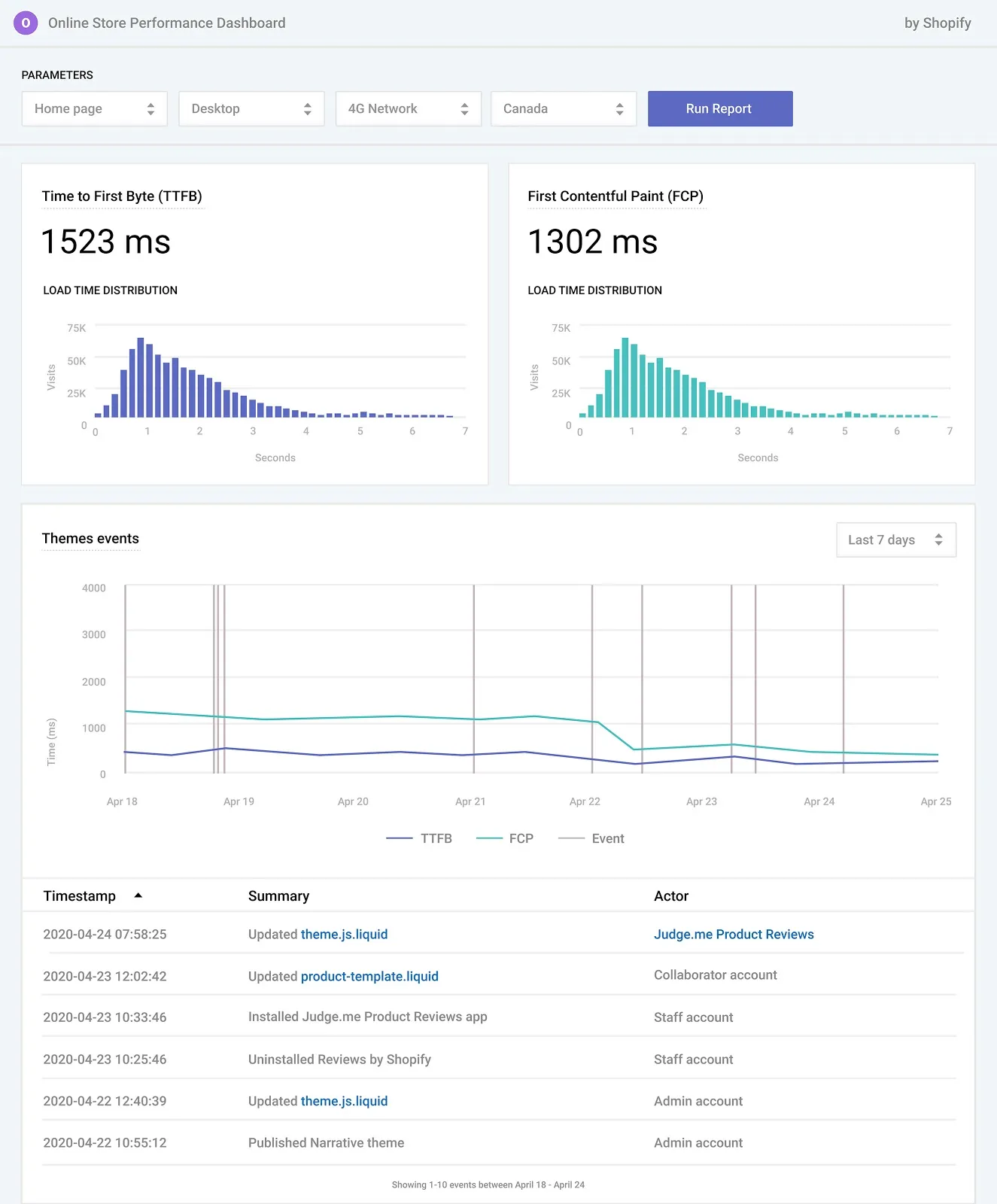
Shopify Plus continuous optimization dashboard
Moreover, the concept of a fixed `conversion rate optimization (CRO) frameworks` and directly impacts revenue.
Project managers can leverage these tools to implement dynamic pricing rules, personalized upsell and cross-sell opportunities, and custom shipping logic. A/B testing variations of the checkout flow allows for continuous refinement and incremental gains.
Customizing the checkout funnel to reduce friction, offer relevant incentives, or provide localized payment options directly translates to higher conversion rates and increased Average Order Value (AOV). These improvements are not one-off; they are continuously optimized.
Through iterative `A/B testing methodologies for e-commerce`, project teams can identify and deploy changes that consistently improve key metrics, ensuring that the checkout process acts as a perpetual revenue growth engine, a vital component of `feature ROI`.
Advanced APIs & Integrations: Fueling a Data Ecosystem for Iterative Improvement
The robust API suite of Shopify Plus facilitates seamless integration with a vast ecosystem of third-party applications and enterprise systems. This interconnectedness is fundamental for building a data-driven operation that supports `continuous optimization`.
Integrating with CRM, ERP, Business Intelligence (BI) tools, and marketing automation platforms creates a unified data environment. This enables comprehensive customer profiles, streamlined fulfillment, and advanced analytics capabilities.
Project managers utilize these integrations to aggregate data, providing a holistic view of business performance. This rich data fuels `data-driven decision making in retail`, allowing teams to identify trends, pinpoint inefficiencies, and discover new opportunities.
The ability to access, analyze, and act upon integrated data ensures that every decision, from marketing spend to inventory levels, is informed and optimized. This iterative improvement through data intelligence is crucial for demonstrating `e-commerce platform scalability metrics` and sustained `feature ROI`.
B2B & Wholesale Channels: Expanding Market Share as a Perpetual Revenue Stream
Shopify Plus natively supports B2B and wholesale functionalities, offering dedicated channels that can significantly expand market share and diversify revenue streams. This represents a perpetual growth opportunity for enterprises.
Project managers can oversee the implementation and optimization of these channels, tailoring pricing, payment terms, and product catalogs for different business customers. This opens up new markets without requiring a separate platform infrastructure.
The strategic expansion into B2B and wholesale provides a consistent source of revenue, often characterized by higher order values and repeat business. This channel diversification strengthens the overall financial resilience of the enterprise.
By continually optimizing the B2B buyer experience and leveraging Shopify Plus features for `international e-commerce expansion strategy`, businesses can secure long-term contracts and cultivate enduring relationships, contributing significantly to the Perpetual P&L.
The Project Manager's Evolved Role: Orchestrating Ongoing Optimization Cycles
Establishing Baselines and Defining Dynamic KPIs for Continuous Performance Tracking
The `project management` role within the Perpetual P&L model shifts from one-time delivery to continuous orchestration. A critical first step is establishing clear performance baselines before any new feature deployment or optimization initiative.
Project managers must define a set of dynamic Key Performance Indicators (KPIs) that extend beyond basic conversion rates. These KPIs should directly measure the impact of `shopify plus pricing features 2026` on revenue, costs, and customer experience.
Examples include tracking incremental `CLV modeling` changes, fluctuations in Average Order Value (AOV), purchase frequency, and the specific `e-commerce platform scalability metrics` relevant to the project. These metrics provide real-time insights into feature effectiveness.
Regular monitoring against these baselines and KPIs enables project managers to quickly identify performance deviations and opportunities for further optimization, ensuring that every feature contributes positively to the ongoing P&L.
Implementing Agile & Lean Methodologies for Feature Rollouts and Experimentation
To support `continuous optimization`, project managers must adopt agile and lean methodologies for feature rollouts. This involves breaking down large initiatives into smaller, manageable sprints, allowing for rapid iteration and feedback.
Instead of monolithic launches, features are deployed incrementally, enabling teams to test hypotheses and gather data in real-world scenarios. This reduces risk and ensures resources are allocated to initiatives with proven value.
The application of `A/B testing methodologies for e-commerce` is central to this approach. Project managers facilitate the setup, execution, and analysis of these tests, ensuring that data drives subsequent development cycles.
This iterative process, guided by agile principles, allows the business to quickly adapt to market changes and consumer feedback, continuously refining the platform for maximum `feature ROI` and sustained competitive advantage.
Fostering a Culture of Data-Driven Iteration and Hypothesis Testing
A fundamental responsibility of the evolved project manager is to cultivate a culture where `data-driven decision making in retail` is paramount. This extends beyond merely collecting data to actively encouraging hypothesis testing and iterative learning.
Project managers must ensure that teams have access to and understand `performance analytics dashboards`, empowering them to interpret data and formulate actionable insights. This involves training and promoting analytical skills across departments.
Establishing regular review cycles where teams present findings from experiments, discuss success metrics, and propose new hypotheses is crucial. This fosters an environment of continuous learning and improvement.
By embedding a mindset of constant questioning and evidence-based decision-making, project managers ensure that every `shopify plus pricing features 2026` iteration is informed by measurable outcomes, driving perpetual value and robust `cost justification`.
Quantifying the 'Perpetual': Advanced Metrics for Demonstrating Long-Term ROI
Measuring Incremental CLV, AOV, and Purchase Frequency: Beyond Basic Conversion
Demonstrating long-term `feature ROI` requires moving beyond simple conversion rates to more sophisticated metrics. The Perpetual P&L focuses on quantifying incremental gains in Customer Lifetime Value (CLV), Average Order Value (AOV), and purchase frequency.
Project managers utilize `CLV modeling` to understand the long-term value of customers acquired or retained due to specific Shopify Plus features. This involves analyzing repeat purchase behavior, subscription retention, and customer journey touchpoints.
Tracking incremental increases in AOV resulting from personalized recommendations, dynamic bundling, or upsell strategies directly attributes revenue growth to specific platform enhancements. Similarly, analyzing the impact on purchase frequency reveals deeper engagement.
These advanced metrics provide a more robust `cost justification` for ongoing Shopify Plus investments, illustrating how features contribute to sustainable revenue streams rather than just one-time transactions.
Valuing Operational Cost Reductions and Resource Reallocation
The Perpetual P&L model places significant emphasis on quantifying `operational cost reductions` achieved through Shopify Plus features. This involves a meticulous analysis of time saved, error rates minimized, and resources reallocated.
For instance, implementing `Shopify Flow workflow automation` can reduce manual hours spent on order processing by a measurable percentage. These savings translate directly into reduced labor costs or the ability to reallocate staff to higher-value activities.
Reduced reliance on external tools due to native Shopify Plus capabilities, or streamlined integrations that eliminate data silos, also represent tangible cost savings. These contribute to a lower `Shopify Plus TCO` over time.
Project managers must develop methodologies to attribute these efficiencies directly to specific platform features, providing concrete evidence of the continuous financial benefits and strengthening the overall `cost justification` argument.
Attributing Value to Enhanced Customer Experience and Brand Loyalty
While often seen as intangible, enhanced customer experience and brand loyalty have a quantifiable impact on the Perpetual P&L. Improved experiences lead to higher retention, positive word-of-mouth, and reduced customer acquisition costs.
Metrics such as Net Promoter Score (NPS), customer satisfaction (CSAT) scores, and the volume of positive customer reviews can be tracked alongside feature rollouts. Correlating these improvements with platform enhancements provides indirect `feature ROI`.
A smoother checkout process, personalized product recommendations, or efficient customer service (all enabled by Shopify Plus) directly contribute to customer satisfaction. This fosters loyalty, leading to higher `CLV modeling` outcomes.
Project managers must establish frameworks to connect these experience-driven metrics to financial outcomes, demonstrating how investments in customer-centric features generate long-term value through sustained relationships and brand advocacy.
Strategic Foresight: Future-Proofing Your Shopify Plus Investment Beyond 2026
Adapting to AI-Driven Personalization and Predictive Analytics
The e-commerce landscape beyond 2026 will be profoundly shaped by AI-driven personalization and predictive analytics. Project managers must strategically integrate these capabilities to maintain `continuous optimization` and competitive edge.
Shopify Plus's capacity for deep data integration allows for the deployment of AI tools that personalize product recommendations, optimize search results, and tailor marketing communications in real-time. This elevates the customer experience significantly.
Leveraging predictive analytics helps anticipate consumer trends, optimize inventory levels, and forecast demand with greater accuracy. This proactive approach minimizes waste and maximizes selling opportunities, contributing to the Perpetual P&L.
Future-proofing involves not just adopting AI, but continuously refining its application, ensuring that these intelligent systems are perpetually learning and improving the platform's performance and `feature ROI`.
Preparing for Emerging E-commerce Technologies and Consumer Behaviors
The pace of technological change demands constant vigilance. Project managers need to prepare their Shopify Plus investment for emerging technologies like voice commerce, augmented reality (AR) shopping, and immersive virtual experiences.
This preparation involves understanding the architectural implications of such technologies, potentially exploring `headless commerce architecture ROI` to ensure front-end flexibility. It also means anticipating shifts in consumer interaction preferences.
Staying abreast of new payment methods, social commerce trends, and evolving data privacy expectations is critical. The platform must be adaptable to integrate these elements seamlessly without requiring complete overhauls.
By maintaining an agile and forward-thinking approach, project managers ensure that the Shopify Plus platform remains relevant and capable of delivering continuous value, safeguarding the long-term `cost justification`.
Building a Resilient Data Strategy for Scalability and Compliance
A robust and resilient data strategy is the bedrock of future-proofed e-commerce operations. Project managers are responsible for overseeing the development of a strategy that ensures data quality, accessibility, and security.
This includes establishing clear data governance policies, ensuring compliance with evolving privacy regulations (e.g., GDPR, CCPA), and implementing robust backup and recovery protocols. Data integrity is paramount for `data-driven decision making in retail`.
The data strategy must also account for `e-commerce platform scalability metrics`, ensuring that as the business grows, its data infrastructure can handle increasing volumes and complexity without performance degradation.
By investing in a resilient data ecosystem, project managers not only protect the business from risks but also enhance its capacity for advanced analytics and `continuous optimization`, solidifying the long-term `feature ROI` of Shopify Plus.
Frequently Asked Questions
What is the Perpetual P&L model for Shopify Plus and why is it crucial for 2026?
The Perpetual P&L model redefines how enterprises evaluate their investment in platforms like Shopify Plus by shifting from a singular, one-time ROI event to an ongoing, dynamic assessment of how platform features continuously impact the business's profit and loss statement. This framework is crucial for 2026 because the e-commerce landscape is characterized by relentless innovation, shifting consumer behaviors, and aggressive market competition, rendering static ROI calculations insufficient. It integrates continuous optimization as a core operational principle, directly linking every feature deployment and refinement to measurable financial outcomes. Project managers leverage this model to orchestrate cycles of implementation, measurement, and refinement, establishing dynamic KPIs to track incremental gains in Customer Lifetime Value (CLV), Average Order Value (AOV), and purchase frequency directly attributable to Shopify Plus features. Furthermore, it quantifies operational cost reductions, resource reallocation efficiencies, and the tangible value of enhanced customer experiences, ensuring every investment is continuously validated against evolving business outcomes. This proactive approach ensures long-term contribution to revenue growth, cost savings, and market share expansion.
How do Project Managers measure continuous ROI for Shopify Plus features?
Project managers measure continuous ROI by establishing dynamic KPIs beyond basic conversion rates, such as incremental Customer Lifetime Value (CLV) changes, fluctuations in Average Order Value (AOV), and purchase frequency. They also quantify operational cost reductions through workflow automation (e.g., Shopify Flow) and resource reallocation efficiencies. Attributing value to enhanced customer experience via metrics like NPS and CSAT also contributes to the overall, ongoing ROI calculation.
Why is a static ROI justification insufficient for Shopify Plus in 2026?
A static ROI justification is insufficient for Shopify Plus in 2026 because the e-commerce landscape is too dynamic. Relentless innovation, shifting consumer behaviors, and aggressive market competition mean platform capabilities and market conditions evolve rapidly. A one-time assessment fails to capture the compounding value of continuous optimization, iterative improvements, and the ongoing operational leverage gained from feature adoption, leading to an incomplete understanding of the platform's true economic impact.
What Shopify Plus features are key for continuous optimization?
Key Shopify Plus features for continuous optimization include Shopify Flow for workflow automation and operational cost reductions, Checkout Extensibility for dynamic conversion rate optimization (CRO) and incremental revenue growth, and Advanced APIs & Integrations for fueling a data ecosystem that supports data-driven decision making. Additionally, B2B & Wholesale Channels enable market share expansion as a perpetual revenue stream.

Ecommerce manager, Shopify & Shopify Plus consultant with 10+ years of experience helping enterprise brands scale their ecommerce operations. Certified Shopify Partner with 130+ successful store migrations.
![Shopify Plus 2026: Arbitrage Features for Max ROI [Guide]](img/blog/shopify-plus-2026-roi-arbitrage-1.webp)
![Shopify Plus 2026: Net Zero Cost via Feature Arbitrage [Expert Guide]](img/blog/shopify-plus-2026-cost-arbitrage-1.webp)
![The Strategic Debt Dividend: Agile Shopify Transitions [Phased Plan]](img/blog/strategic-debt-dividend-shopify-transition-1.webp)